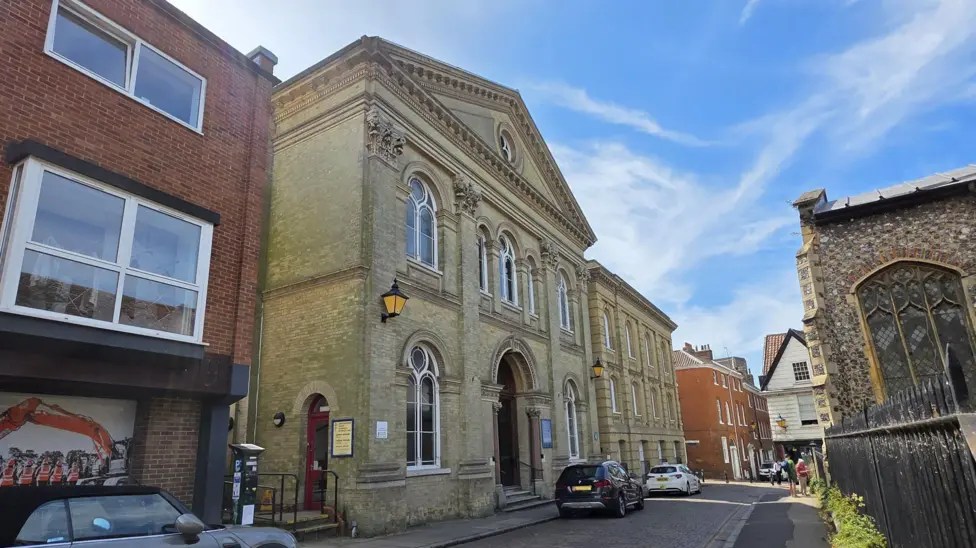
1285 owner of messuage on which chapel was built was John Albon, chaplain
1287 William Albon sold messuage to John le Skirmischur
1326 Johanna Bigoth, daughter of John Skirmyshour sold part to Laurence de Maners de Harpelee, clerk
1558 Cunningham map, highlighting buildings in front of St Michael at Plea, location of the chapel.
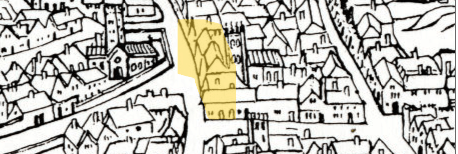
1568-1570 Landgable – Thomas Peck alderman (and grocer) for his tenement and capitall mese late John Parisshe lyeng betwyn the tenement late Albons now Woodcroft on the west and abuttith upon the way northe (in St Michael at Plea)
William Woodcrofte for the tenement upon the corner late Thomas Albon. William Woodcroft was a grocer in St Michael at Plea 1544 (married there) -1589 (death)
1789 Hochstetter map

1811 directory – Hungate has the Permit-office, in St. Peter’s Hungate, opposite the Church
1817 John Alexander, originally from Liverpool, came to Norwich as a student from Hoxton Theological College. He impressed the breakaway group from Bishopgate Street Tabernacle and they invited to become the first pastor of proposed new Congregational Church.
1818 Philip Blake Mann, son of James and Mary Ann Mann, born May 14 1818, died Aug 14 1818, initially buried at St Michael at Plea, and then moved to a vault in Princes St Chapel.
1819 Longman Map – 19 = St Michael at Plea, 20 = St Peter Hungate
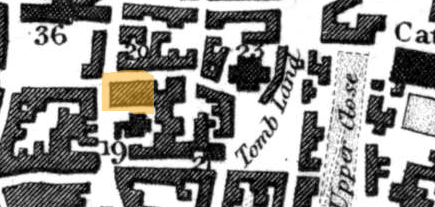
1819 March – Foundation stone of a Dissenting chapel laid in Princes Street, in the parishes of St Michael at Plea and St Peter Hungate. John Alexander is minister 1819-1866. “… 1819 chapel of white brick … “at the cost of £4,500, including £1,000 paid for the land. It will seat 1,000 hearers.” History, Gazetteer and Directory of Norfolk 1836. The cost was borne by the congregation.
1819 September – Elizabeth Windett buried in a vault under the gallery of Princes Street chapel – daughter of James and Sarah Windett, born Jan 30 1805.
1819 1 December – first service held
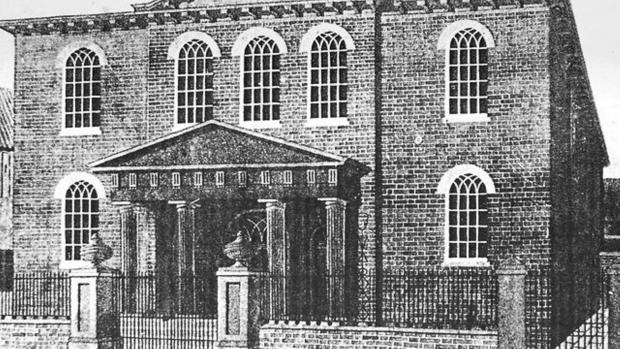
1819 December – a gentleman who stood in a crowd near the door had his pocket picked of a pocket book containing £8 and several other valuable papers. The pocket book was found, without the notes, in the Tombland churchyard.
1820 – Sunday school established in the church
1821 – Mary Ann Mann, daughter of James and Mary Ann Mann, born July 8th 1821, died August 30th. Buried in a vault under the gallery of Princes Street chapel
1822 Sarah Windett, wife of James Windett, Magdalen Street. Born Aug 11 1780. Buried in a vault under the gallery of Princes Street chapel
1824 Register of burials made in a brick grave under the gallery at the east side of the vault in Princes St Chapel – 1 June, William Pigg, in the 43rd year of his age, carpenter, St Paul’s parish.
1826 Henry Mann, son of James and Mary Ann Mann, died aged 12 days. Harriet Alexander, daughter of John (the rector)and Priscilla, died in the third year of her age. Both buried in vault at Princes St Chapel.
1827 Mary Ann Mann, daughter of James and Mary Ann Mann, died aged 1 month and buried in vault.
1828 Mary Ann Mann, wife of James Mann, died aged 35 and buried in vault.
1828 alterations to flat roof. Donations from the Baptists at St Mary’s Chapel and the Congregationalists at the Old Meeting House
1828 register of burials made in a vault near the steps at the entrance of Princes Street Chapel – died 12th November, in the 38th year of her age, Susannah, wife of Joseph Pigg, cabinet maker, St George Colegate and Susannah their infant daughter a few days later.
1831 the Congregational Union of England and Wales was established
1833 Ellen Elizabeth, daughter of Joseph Pigg and Ellen, dies in the first year of her age, buried in the vault as for 1828.
1833 Edward Boardman (future architect of the church), son of James and Frances nee Theobald, is baptised at Princes St Chapel.
1837 marriages were allowed in non-conformist churches
1861 further building built to the east for a school room
1866 appointment of George Slatyer Barrett as Minister
1868 decision to undertake major rebuild – to Edward Boardman designs.
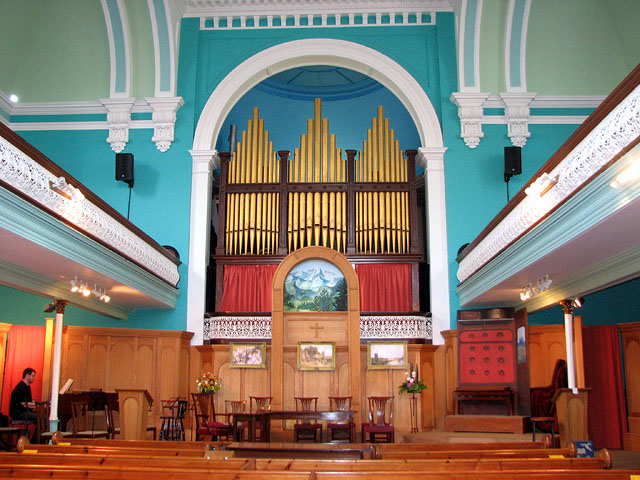
1881 Sunday School building, Boardman House, erected, to accommodate 1000 children, next to the chapel.
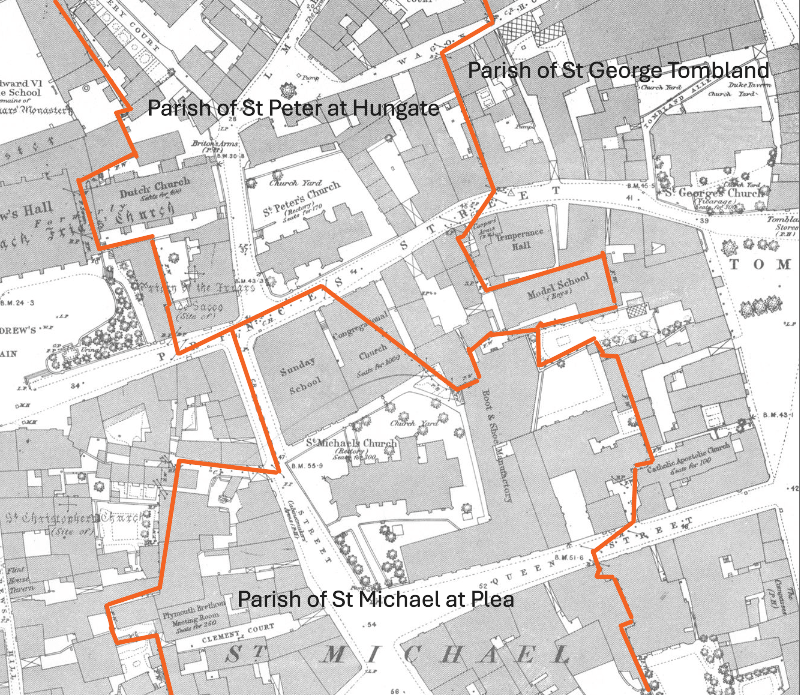
1884 Ordinance survey map shows the Congregational Church was across two parishes – St Peter Hungate and St Michael at Plea
1927 payment for pews replaced by a freewill offering
1966 Congregational Union of England and Wales became the Congregational Church in England and Wales
1969 link created between church and lower floor of Boardman House
1972 United Reformed Church formed by the union of the Presbyterian Church of England and the Congregational Church in England and Wales. Princes Street church becomes part of this.
1977 removal of some of rear pews and erection of a glass and timber screen
2000 glass doors installed at entrance to church to enable passers by to see inside. Platform extended and high level pulpit removed.
2013 Boardman House sold to Norwich University of the Arts to finance renovation. Pews removed and new underfloor heating installed with new flooring. New kitchen built at the side. Church Cottage reincorporated into the main building to provide two meeting rooms.
2015 Church reopened
Church used for concerts, music festivals, music exams, fitness and dance classes, films, talks, lunches and meetings.
2023 Church sold to a private developer
Some Account of St Peter’s Hungate Parish, Norwich, F. Beecheno, Norfolk Archaeology Vol 21 Par 2 1921
Top photo – United Reformed Church present day – Paul Moseley BBC
 Friends of Princes Street